BIGSTORY Network


International News Feb. 26, 2026, 3:59 p.m.

The Stolen Speedboat: Why a Deadly Shootout in Cuba is Sparking a Cold War Crisis

A deadly shootout between Cuban forces and a stolen Florida speedboat leaves four dead, reigniting Cold War tensions. Inside the rogue mission and the U.S. response.

by Author Sseema Giill
Hero Image

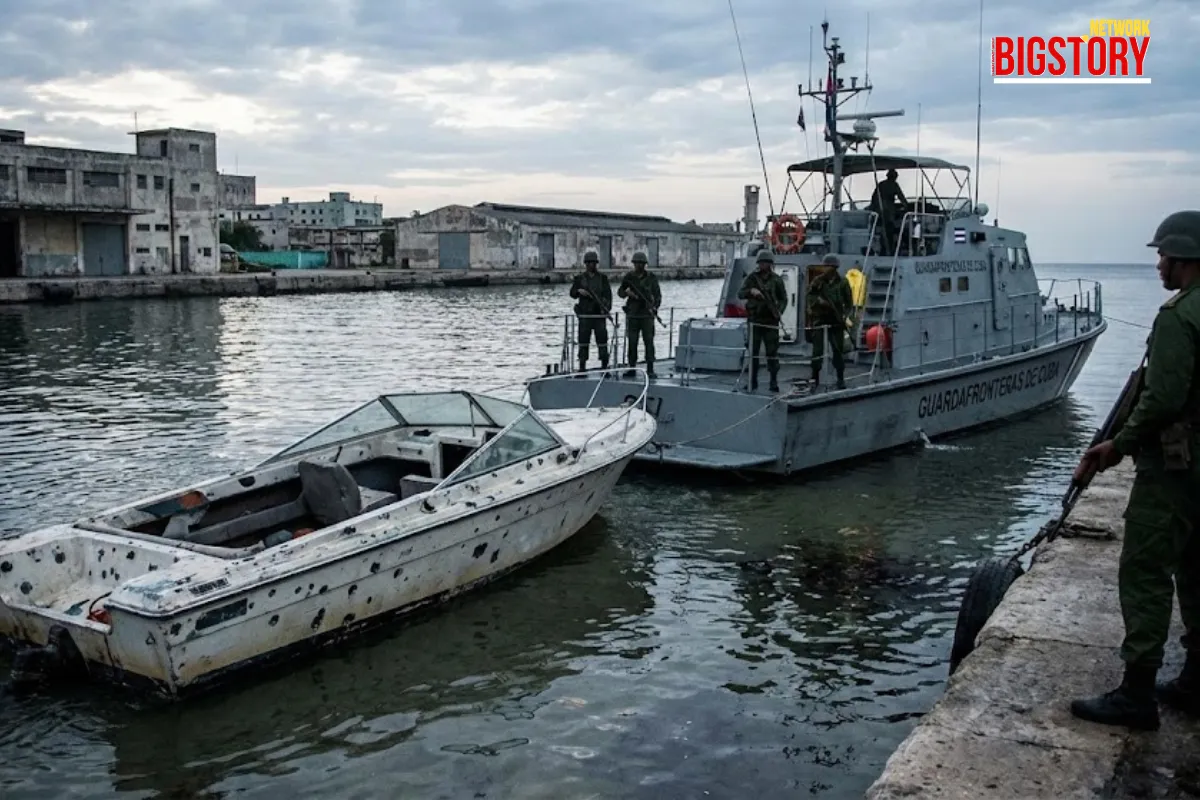
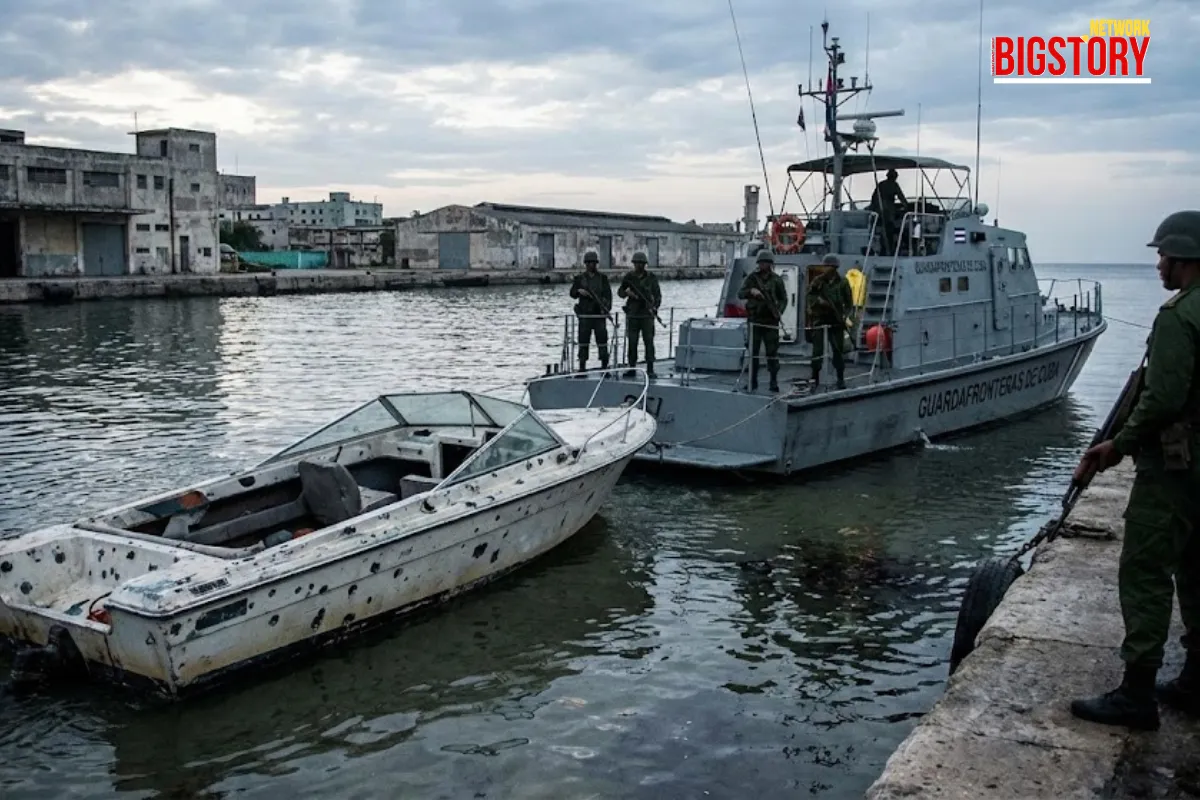
The Straits of Florida have once again become a flashpoint for international crisis. In the early hours of February 25, 2026, a high-speed maritime chase off the northern coast of Cuba's Villa Clara province escalated into a deadly firefight. According to Havana, a 24-foot Florida-registered speedboat penetrated Cuban territorial waters, opening fire on an intercepting Border Guard vessel. The resulting shootout left four boat passengers dead and a Cuban commander injured.

This matters because it threatens to ignite a powder keg that has been building since the start of the year. U.S.-Cuba relations entered a catastrophic "deep freeze" in January following "Operation Absolute Resolve" in Venezuela, which saw the capture of Nicolás Maduro and the deaths of dozens of Cuban military advisors. In this hyper-volatile climate, Havana is eagerly framing this speedboat incident not as a tragic smuggling run, but as a state-sponsored paramilitary assault orchestrated by "Yankee-backed" terrorists.

The "BigStory" Angle (The "Stolen Boat" Narrative & AI Forensics)

Mainstream media is amplifying Havana’s "organized infiltration" claims. They are missing the crucial "Stolen Boat" Defense.

U.S. law enforcement has already confirmed that the 24-foot vessel used in the shootout was reported stolen from a Florida Keys marina prior to the incident. This fundamentally shifts the legal and diplomatic landscape. Instead of a highly coordinated paramilitary cell, intelligence analysts suspect this may have been a desperate, heavily armed "rogue mission" executed by Cuban expatriates seeking to capitalize on the recent anti-government protests (cacerolazos) that swept Havana on February 6.

Furthermore, a forensic technological war is quietly unfolding. With Cuba claiming the passengers fired first, the U.S. State Department is reportedly utilizing AI to analyze satellite imagery, thermal flashes, and sea-drifting patterns to independently reconstruct the shootout. Proving who fired the first shot will be the definitive factor in the Florida Attorney General's upcoming legal probe.

The Context (Rapid Fire)

  • The Trigger: The interception took place just 1 nautical mile from the Cuban shore near the El Pino channel, catching the 10 passengers—all identified as Cuban residents of the U.S.—in a lethal crossfire.
  • The Backstory: Cuba is currently reeling from worsening food shortages and a crippling oil blockade, leading to massive civil unrest earlier this month. The expatriate diaspora in Miami has been highly agitated, seeking ways to support their families on the island.
  • The Escalation: U.S. Secretary of State Marco Rubio, currently attending a regional summit in St. Kitts & Nevis, confirmed a federal investigation into the citizenship of the victims while vehemently denying any U.S. government involvement.

Key Players (The Chessboard)

  • Miguel Díaz-Canel (The Defender): The Cuban President is leveraging the bloodshed to rally his domestic base, framing the shootout as a defense of national sovereignty against persistent imperialist aggression.
  • Marco Rubio (The Diplomat): The U.S. Secretary of State is walking a geopolitical tightrope, managing the fury of his Florida GOP base while legally insulating the U.S. government from an unsanctioned paramilitary disaster.
  • Amijail Sánchez González (The Infiltrator): Identified by Cuban authorities as one of the passengers. Havana claims he is a wanted individual with a known history of terrorism-related and violent activities, utilizing his presence to justify the use of lethal force.

The Implications (Your Wallet & World)

  • Short Term (Florida Boat Owners): State authorities have issued a "High Vigilance" notice for all marinas in South Florida. If you own a vessel in the Keys, immediately upgrade your security protocols, as rogue groups may attempt to procure more boats for retaliatory missions.
  • Long Term (International Law): Watch for the U.S. State Department’s forensic report due around March 5. If Washington concludes that Cuba used disproportionate lethal force against civilians attempting to flee or surrender, expect a massive push for further maritime sanctions.

The Closing Question

While the U.S. denies involvement, the expatriate community in Miami views these men as martyrs trying to help a starving island. Should the U.S. prosecute the surviving participants for violating the Neutrality Act, or protect them as political refugees? Tell us in the comments.

FAQs

  • Q: Did the U.S. military attack Cuba on February 25, 2026?
  • A: No. The Pentagon and the U.S. State Department have officially confirmed that no U.S. military, Naval, or Coast Guard assets were involved in the shootout off the coast of Cuba.
  • Q: Who were the four people killed by the Cuban Coast Guard?
  • A: The fatalities were among the 10 passengers aboard the speedboat. All individuals have been identified as civilian Cuban expatriates currently living in the United States.
  • Q: Was the Florida speedboat involved in the Cuba shootout stolen?
  • A: Yes. U.S. law enforcement confirmed that the 24-foot speedboat was reported stolen by its owner from a marina in the Florida Keys prior to the confrontation.
  • Q: What weapons were found on the boat intercepted by Cuba?
  • A: While full inventories remain classified, Cuban authorities reported that the occupants were heavily armed and engaged Border Guards with automatic gunfire, leading Havana to label them a "terrorist infiltration" cell.

Sources:


Sseema Giill
Sseema Giill Founder & CEO

Sseema Giill is an inspiring media professional, CEO of Screenage Media Pvt Ltd, and founder of the NGO AGE (Association for Gender Equality). She is also the Founder CEO and Chief Editor at BIGSTORY NETWORK. Giill champions women's empowerment and gender equality, particularly in rural India, and was honored with the Champions of Change Award in 2023.

BIGSTORY Trending News! Trending Now! in last 24hrs

The Stolen Speedboat: Why a Deadly Shootout in Cuba is Sparking a Cold War Crisis
International News
The Stolen Speedboat: Why a Deadly Shootout in Cuba is Sparking a Cold War Crisis
The 10-Day Clock: Why Trump's Iran Ultimatum is an Economic Siege, Not Just a Military Threat
International News
The 10-Day Clock: Why Trump's Iran Ultimatum is an Economic Siege, Not Just a Military Threat
The End of the UN? How Trump is Using the Iran Crisis to Rewrite Global Law
International News
The End of the UN? How Trump is Using the Iran Crisis to Rewrite Global Law
The "Smart Control" Trap: Why Iran Just Fired Missiles Hours Before Geneva Talks
International News
The "Smart Control" Trap: Why Iran Just Fired Missiles Hours Before Geneva Talks